
Contents
- 🎵 Origins & History
- ⚙️ How It Works
- 📊 Key Facts & Numbers
- 👥 Key People & Organizations
- 🌍 Cultural Impact & Influence
- ⚡ Current State & Latest Developments
- 🤔 Controversies & Debates
- 🔮 Future Outlook & Predictions
- 💡 Practical Applications
- 📚 Related Topics & Deeper Reading
- Frequently Asked Questions
- References
- Related Topics
Overview
The vestibulo-ocular reflex was first described in the early 19th century, with significant contributions from scientists like Charles Bell and Franz Gall. Its understanding evolved through the work of Julius Bernstein in the late 1800s, who studied the physiological mechanisms behind eye movements. By the mid-20th century, researchers such as James Larson expanded on these findings, linking the VOR to the vestibular system's role in maintaining balance and orientation. The reflex's importance in visual stability has been recognized in both clinical and educational settings, particularly in understanding eye movement disorders.
⚙️ How It Works
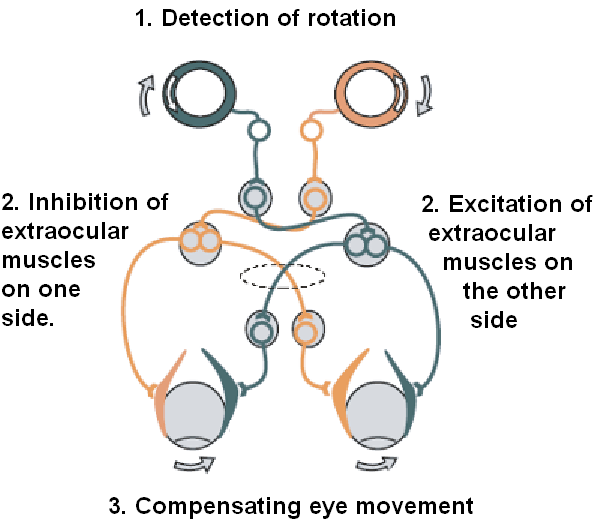
The VOR operates by utilizing the vestibular system, which includes the inner ear structures like the semicircular canals and otolith organs. When the head rotates, these structures detect the motion and send signals to the ocular muscles, prompting the eyes to move in the opposite direction. This reflex is automatic and does not require conscious thought, allowing for seamless visual tracking during everyday activities. The VOR can also be triggered by thermal stimulation of the inner ear, showcasing its adaptability.
📊 Key Facts & Numbers
The VOR is often assessed in clinical settings. New diagnostic tools, such as video head impulse tests, are being developed to evaluate VOR performance in real-time. The integration of virtual reality in therapy is also being investigated for improving balance and visual stability.
👥 Key People & Organizations
Notable figures in the study of the VOR include Richard Bonnet, who contributed to the understanding of eye movement disorders, and James Holmes, known for his work in vestibular rehabilitation. Organizations such as the American Academy of Ophthalmology and the Vestibular Disorders Association play crucial roles in promoting awareness and research on the VOR and its implications for eye health. These individuals and organizations have significantly advanced our understanding of the VOR and its clinical applications.
🌍 Cultural Impact & Influence
The VOR has profound cultural implications, particularly in sports and visual arts. Athletes rely on a well-functioning VOR for performance, as it allows for precise tracking of fast-moving objects. For example, in sports like baseball and tennis, players depend on their VOR to maintain focus on the ball while moving. In visual arts, understanding the VOR can enhance techniques in animation and cinematography, where maintaining viewer focus is paramount. The VOR's role in everyday life underscores its importance beyond clinical settings, influencing how we interact with the world around us.
⚡ Current State & Latest Developments
Controversies surrounding the VOR often center on the effectiveness of rehabilitation techniques for vestibular disorders. While some experts advocate for traditional vestibular rehabilitation exercises, others argue for the incorporation of newer methods, such as virtual reality training. There is ongoing debate about the best approaches to enhance VOR function and the extent to which these techniques can improve quality of life for affected individuals. Additionally, the relationship between VOR impairment and cognitive decline in older adults is a topic of active research and discussion.
🤔 Controversies & Debates
Looking ahead, the future of VOR research appears promising, with potential breakthroughs in understanding its neurological underpinnings. Experts predict that advancements in neuroimaging will provide deeper insights into how the VOR is processed in the brain. Furthermore, the development of personalized rehabilitation programs tailored to individual needs may enhance recovery outcomes for those with vestibular disorders. As our understanding of the VOR expands, it may lead to innovative treatments that improve visual stability and overall quality of life.
🔮 Future Outlook & Predictions
The practical applications of the VOR are vast, particularly in clinical settings. Eye care professionals utilize VOR assessments to diagnose vestibular disorders and determine appropriate treatment plans. Rehabilitation exercises designed to enhance VOR function are commonly prescribed for individuals recovering from vestibular injuries. Additionally, the VOR is integral in designing training programs for athletes, ensuring they can maintain visual focus during dynamic movements. Understanding and improving the VOR can significantly impact various fields, from sports medicine to rehabilitation therapy.
💡 Practical Applications
Related topics include eye movement disorders, saccadic eye movements, and binocular vision techniques. Each of these areas intersects with the VOR, providing a broader understanding of ocular motor skills and their implications for visual health. Further reading on these topics can deepen knowledge about the complexities of eye movements and their critical roles in daily life.
Key Facts
- Year
- 2024
- Origin
- Global
- Category
- science
- Type
- concept
Frequently Asked Questions
What is the vestibulo-ocular reflex and why is it important?
The vestibulo-ocular reflex (VOR) is a reflex that stabilizes vision by coordinating eye movements with head movements. It is crucial for maintaining a clear visual field during activities such as reading and sports. The VOR ensures that the eyes move in the opposite direction of head movement, allowing for stable images on the retina.
How does the vestibulo-ocular reflex function?
The VOR functions through the vestibular system, which includes structures in the inner ear that detect head movement. When the head rotates, these structures send signals to the ocular muscles, prompting the eyes to move in the opposite direction. This automatic response ensures that the visual field remains stable, even during rapid head movements.
What are the consequences of VOR impairment?
Individuals with impaired VOR may experience symptoms such as dizziness, blurred vision, and difficulty maintaining balance. This can significantly affect their quality of life, making it challenging to perform everyday tasks.